Infrastructure Case Study
Enterprise IT Infrastructure Homelab
An end-to-end project building and securing an enterprise network: pfSense as firewall and gateway, a Windows Server 2022 Domain Controller for the 'homelab.local' domain, Netdata for real-time monitoring, and a Suricata IPS that detected a simulated insider attack in real time.
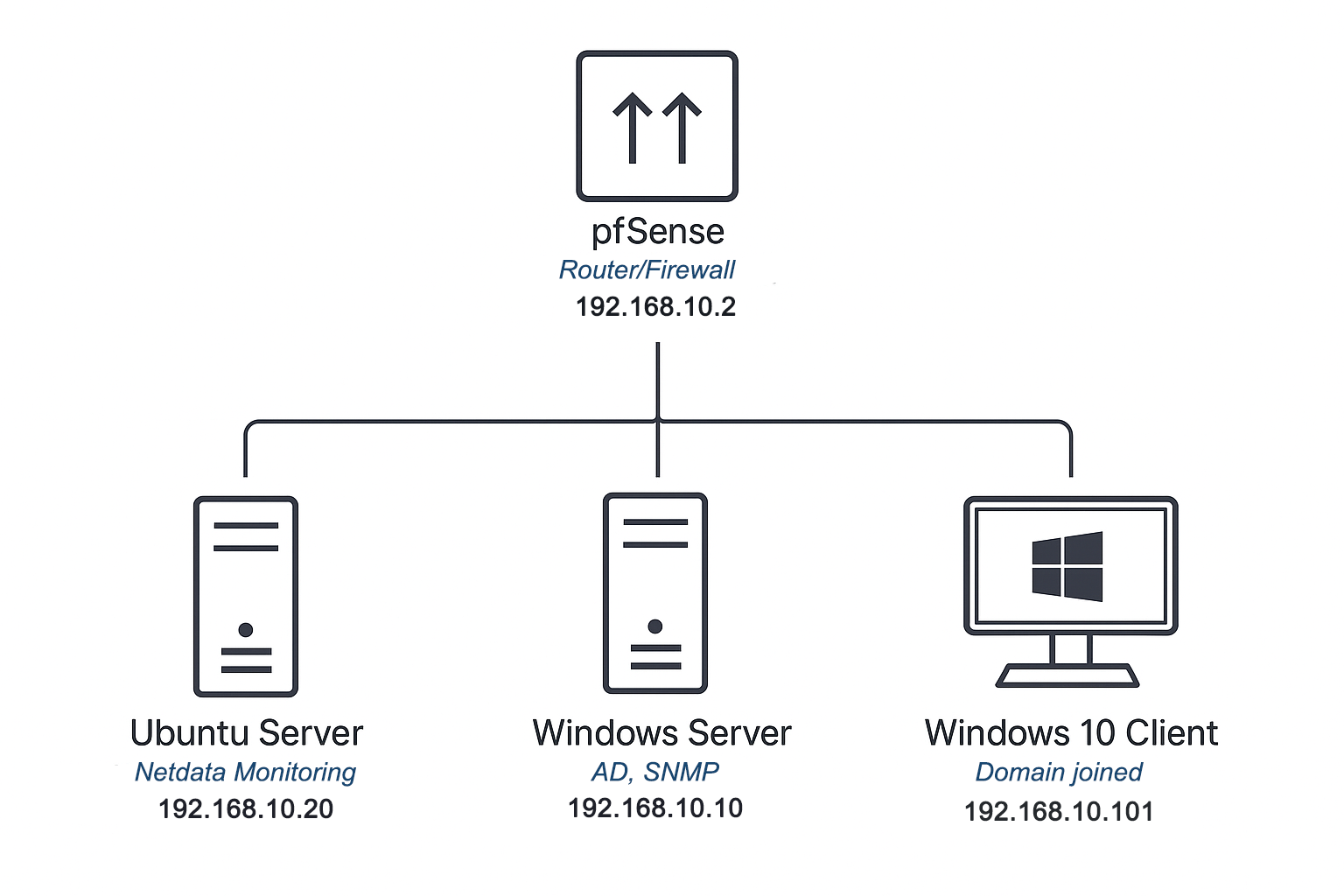
VMware lab: pfSense firewall/gateway, Windows Server 2022 Domain Controller at 192.168.10.10, internal workstation at 192.168.10.101, segmented 192.168.10.0/24 subnet, Suricata IPS with ETOpen rules.
Short Summary
The project covers the full lifecycle of an enterprise IT environment: first a stable foundation of firewall, Domain Controller, and network segmentation, then monitoring, then security. Finally, the defenses were put to the test with a simulated insider attack.
- pfSense serves as firewall and gateway, segmenting the network into a realistic environment.
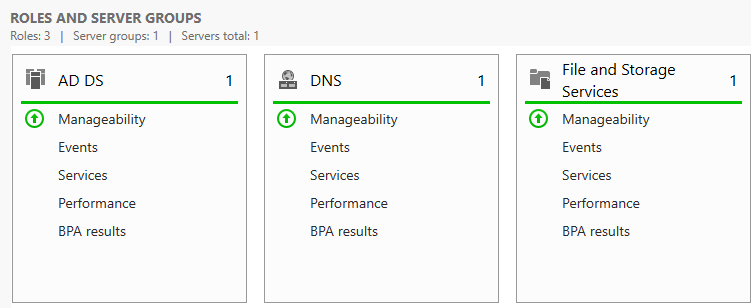
- A Windows Server 2022 Domain Controller manages centralized Active Directory and DNS services for 'homelab.local'.
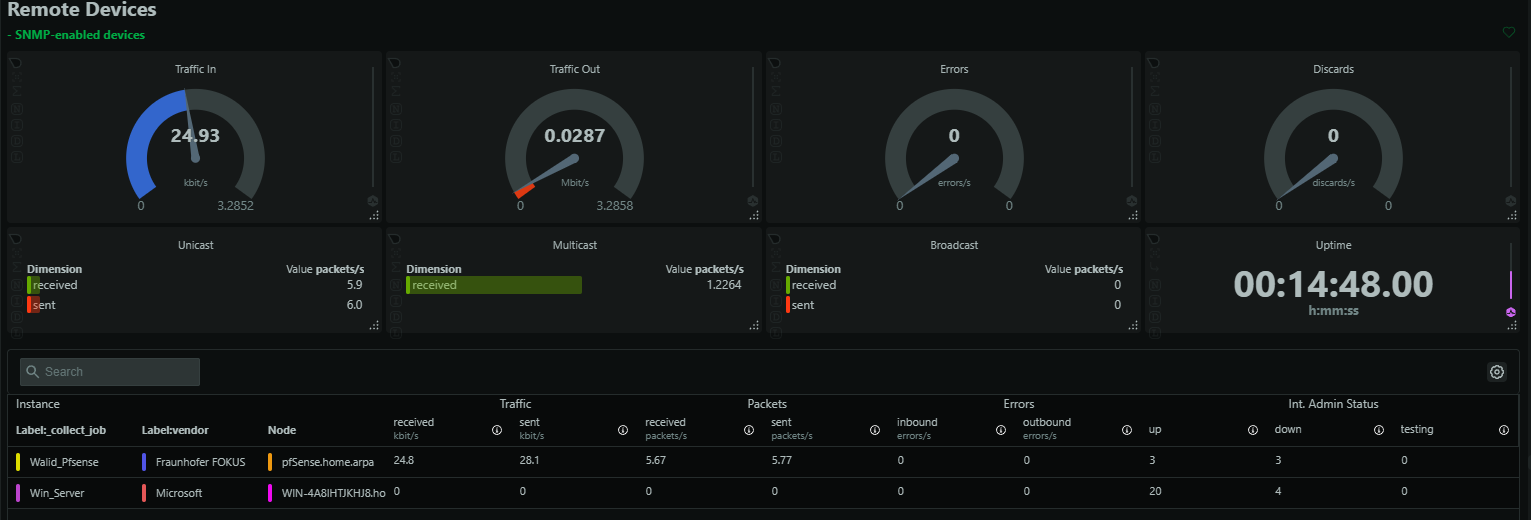
- Netdata provides real-time performance and health metrics for all core infrastructure.
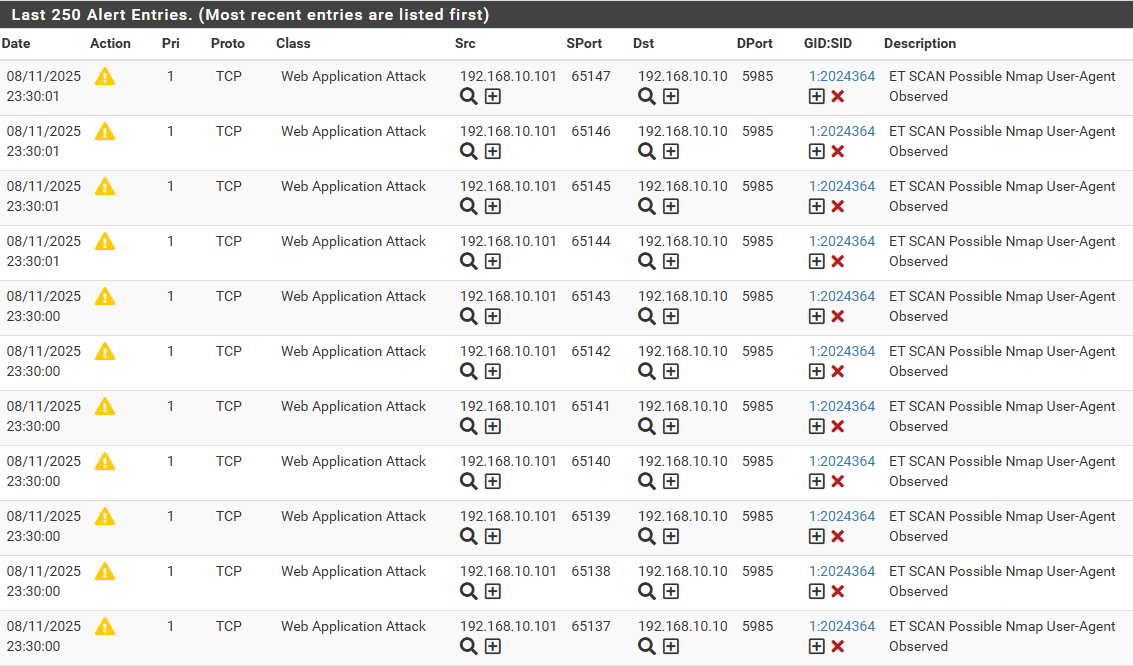
- A Suricata IPS on the pfSense firewall detected a simulated Nmap reconnaissance scan in real time.
Network Topology
Building the Core Services
A Windows Server 2022 was deployed as the heart of the network. It was promoted to the role of a Domain Controller for the 'homelab.local' domain, managing centralized Active Directory and DNS services.
Before layering on security, real-time monitoring with Netdata provided visibility: performance and health metrics for all core infrastructure, including SNMP polling of the network devices.
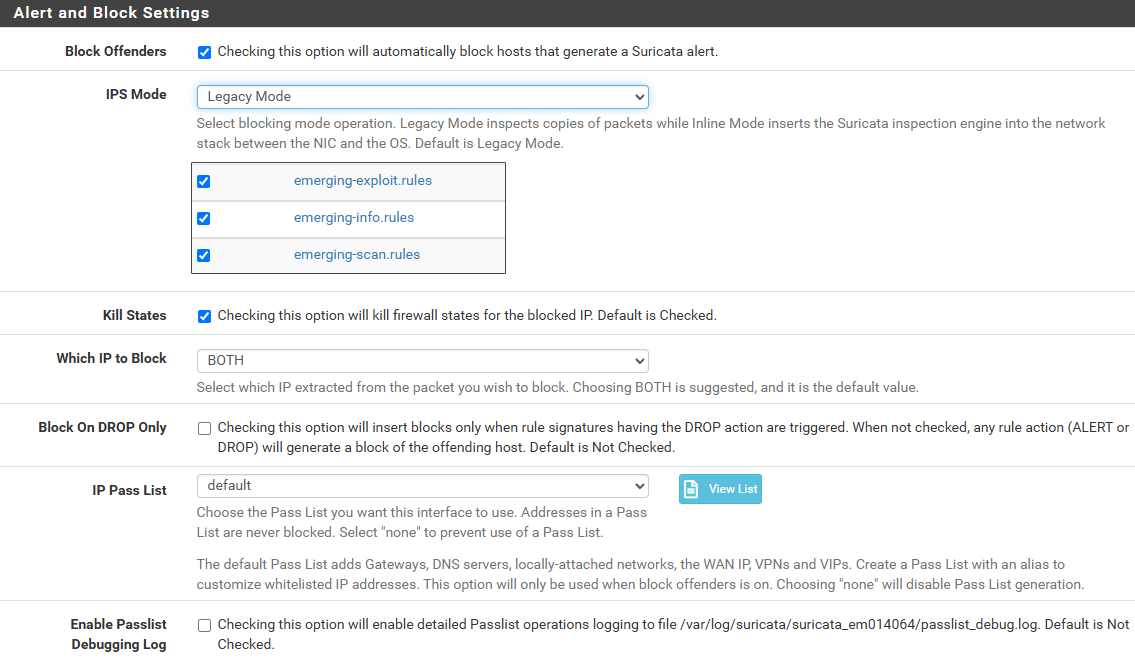
With the network operational, the focus shifted to security: a Suricata IPS was deployed on the pfSense firewall and armed with the industry-standard ETOpen rule sets for threat detection.
Attack Simulation and Proof
To validate the IPS, an insider threat was simulated: a reconnaissance scan was launched with Nmap from an internal workstation (192.168.10.101) against the Domain Controller (192.168.10.10). This mimics an attacker mapping the internal network for vulnerabilities.
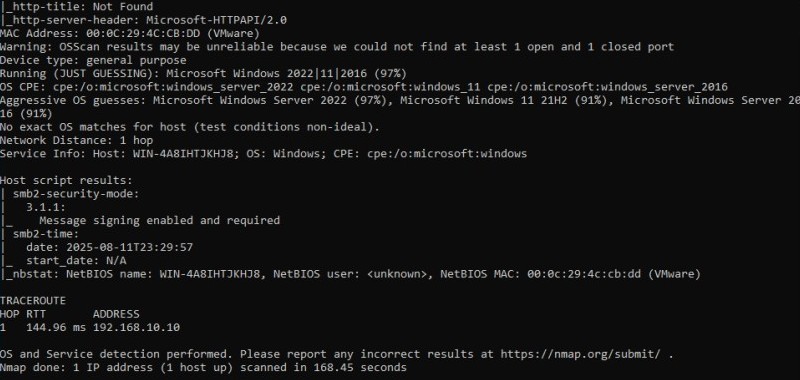
The IPS detected the hostile scan immediately in real time, triggering multiple high-priority alerts including 'ET SCAN Possible Nmap User-Agent'. This proves the system's ability to reliably identify threats within the trusted network, confirming the project's success.